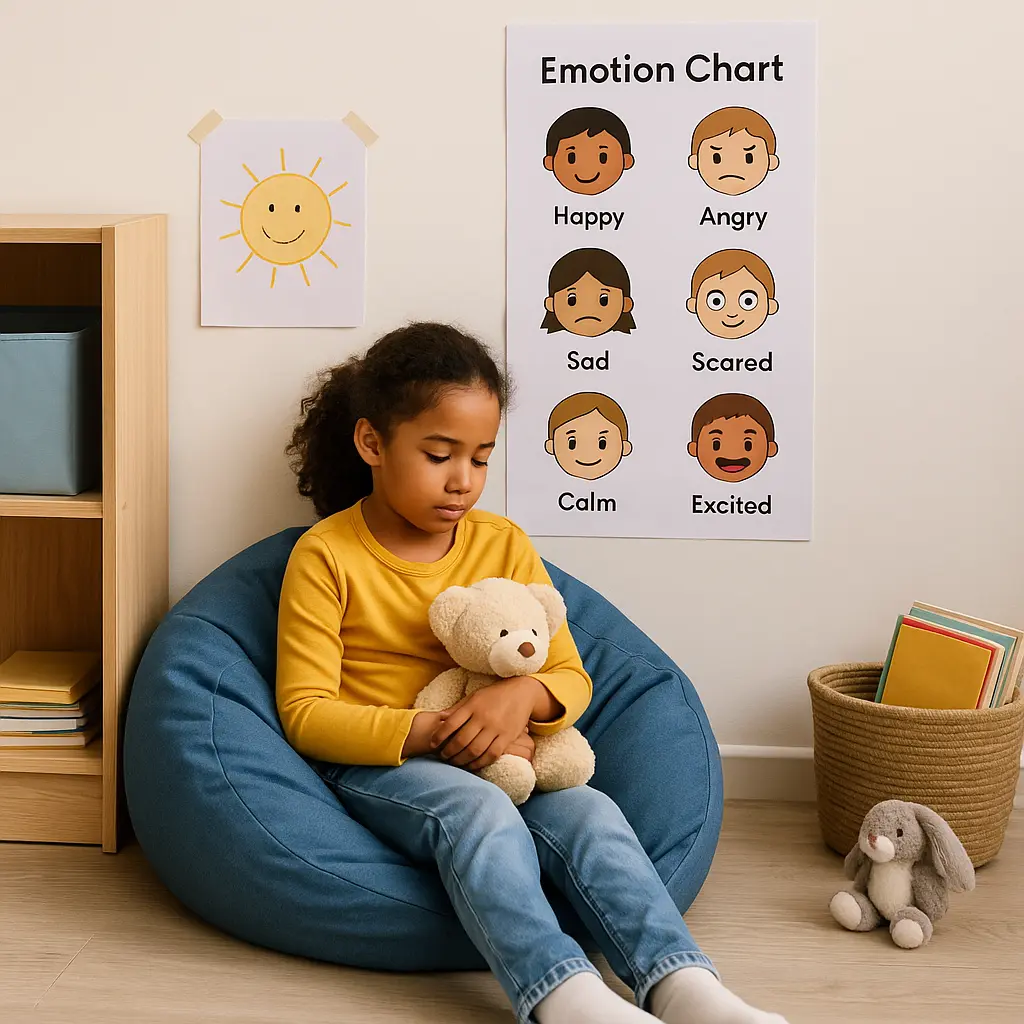
When children feel overwhelmed — whether from big emotions, loud environments, or challenging tasks — they don’t always have the tools to calm themselves down. That’s where calming corners come in. These intentional spaces give children a safe place to pause, breathe, and reset so they can return to learning with a clearer mind.
At Mosaic Learning Academy, calming corners are part of our Whole Child Wellness model. They help children build resilience, focus better on academics, and feel supported at school. And the best part? Families can use these strategies at home too.
What Is a Calming Corner?
A calming corner is a designated spot in a classroom or home where children can go when they need to manage their emotions. It’s not a punishment or a “time-out.” Instead, it’s a positive, supportive environment where children can practice self-regulation skills.
A calming corner might include:
- Soft seating like a bean bag or cushions
- Visuals to help children identify their feelings
- Tools for calming, such as stress balls, fidgets, or weighted lap pads
- Simple activities like journals, coloring, or breathing exercises
The goal is to help children recognize their emotions, choose a calming strategy, and return to their activity ready to focus and learn.
Why Schools Use Calming Corners
Classrooms are busy, sometimes overwhelming places. For young children, that stimulation can lead to frustration or emotional overload. Calming corners help by:
- Reducing classroom disruptions so children can get back on track faster.
- Supporting diverse learners, including those with ADHD, autism, or sensory sensitivities.
- Teaching practical skills children can use in everyday life — taking a breath, finding focus, and trying again.
- Showing children that school is not just a place for academics, but also for learning how to handle challenges.
Addressing Concerns
Some families worry that focusing on feelings in school is “too touchy-feely” or political. At Mosaic, our approach is simple: we’re teaching children practical skills that help them learn better.
Self-regulation isn’t about ideology — it’s about life. When children know how to calm down after frustration, take a breath before reacting, or ask for help instead of shutting down, they are more ready to focus on reading, math, and problem-solving.
Most parents already teach these lessons at home when they say, “use your words,” “take a breath,” or “try again.” A calming corner is just a structured way for children to practice those same skills in the classroom.
How Calming Corners Help Children
Research backs up what parents already know: children who can manage their emotions do better in school.
- A review of more than 200 studies found that students taught strategies for self-regulation and healthy relationships had an 11% boost in academic performance compared to peers.
- Children with stronger emotional regulation are more likely to graduate high school and succeed in careers.
- Emotional resilience reduces stress and builds confidence, which supports long-term mental health.
By giving children a safe space to reset, calming corners support learning, behavior, and overall well-being.
How Families Can Create a Calming Corner at Home
You don’t need a lot of space or money to create one. A small nook, closet corner, or part of a bedroom can work.
Here’s how:
- Choose a quiet spot where your child feels safe.
- Add comfortable seating like a pillow or chair.
- Offer simple tools — fidgets, stuffed animals, coloring supplies, or a favorite book.
- Post visuals such as emotion charts or calming strategies.
- Model and practice: show your child how to use the space when they feel upset.
The goal is to present it as a positive choice: “Would you like to use your calming corner to take a break?” This builds independence in managing feelings.
Why This Matters for All Children
Calming corners aren’t just for kids with special needs or certain personalities. They benefit all children. Every child experiences big emotions — frustration over a tough math problem, sadness after a conflict with a friend, or excitement that’s hard to control.
By normalizing emotional regulation for everyone, we reduce stigma and equip every child with tools for success in school and life.
A Foundation for Life
At Mosaic, calming corners are one way we put Whole Child Wellness into action. By teaching children how to manage emotions, focus their minds, and rejoin learning with confidence, we prepare them not just to succeed academically but to thrive in life.
Mosaic Learning Academy opens in August 2026 for grades K–2, with a school culture that values health, confidence, and academic growth together.
Join our Interest List today to learn more about our approach and how you can be part of our Founding Families.
Because children don’t just need academics — they need safe spaces to feel supported and ready to grow.